PMP 2026 | 50 | Scope Toolkit: Boundaries, Work Breakdown, and Backlogs
One stakeholder expects a static PDF report while another imagines a live dashboard. Scope clarity starts by exposing differences like these before they become disputed commitments. This toolkit brings elicitation, shared terminology, explicit exclusions, decomposition, and acce…
CURRENT EDITION: PMP 2026. This episode is part of Season 2, the recommended course for the current certification exam.
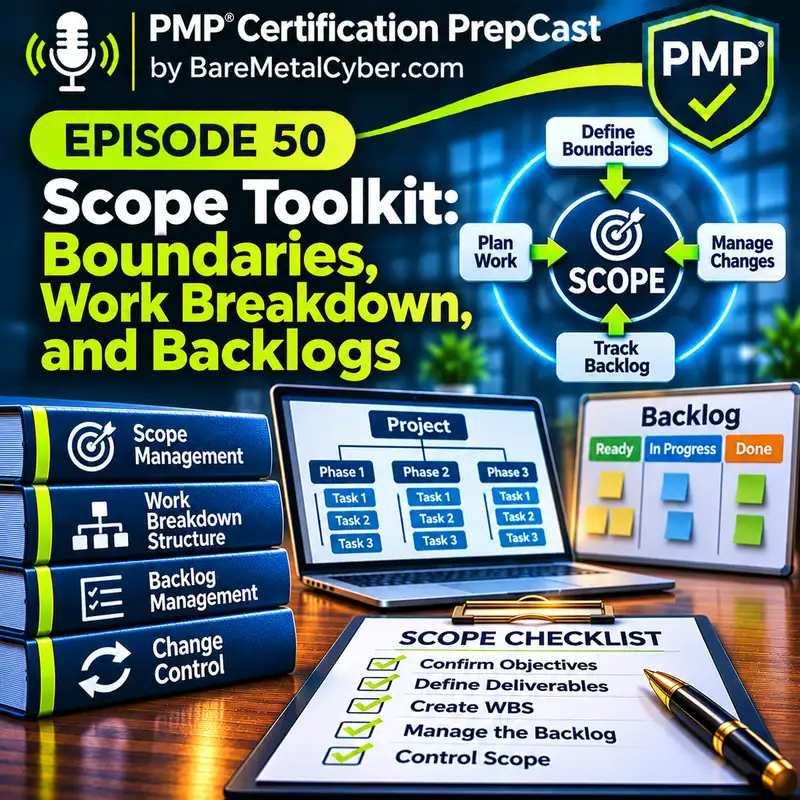
One stakeholder expects a static PDF report while another imagines a live dashboard. Scope clarity starts by exposing differences like these before they become disputed commitments. This toolkit brings elicitation, shared terminology, explicit exclusions, decomposition, and acceptance evidence together. The work breakdown structure's 100% rule includes the full authorized scope, including necessary management work, while backlog refinement makes evolving product needs visible and understandable.
Practical distinctions keep these tools useful. Item-specific acceptance criteria differ from Scrum's shared Definition of Done, optional readiness criteria do not freeze learning, and a Sprint Review is not automatically a contractual acceptance gate. Requirements traceability connects work with tests, evidence, and intended value. A stakeholder's emailed tweak after sign-off then tests how to distinguish a new capability from an unmet existing requirement, record the request, and identify the appropriate authority. Keeping an item in a log or backlog shows its status; it does not, by itself, authorize the team to implement it.
Visit https://BareMetalCyber.com for more certification study resources and podcasts.