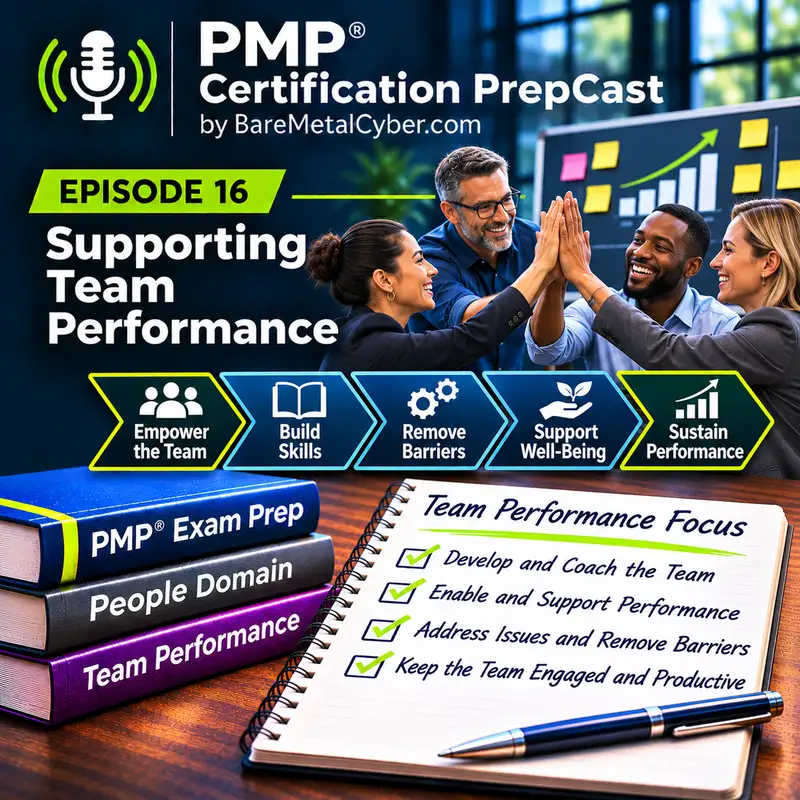
PMP 2026 | 16 | Supporting Team Performance
When cycle time doubles, the cause may be a blocked dependency, missing evidence, limited review capacity, or a skill gap. Treating every performance problem as a motivation problem can leave the real constraint untouched. This episode examines team performance as an interaction…
CURRENT EDITION: PMP 2026. This episode is part of Season 2, the recommended course for the current certification exam.
When cycle time doubles, the cause may be a blocked dependency, missing evidence, limited review capacity, or a skill gap. Treating every performance problem as a motivation problem can leave the real constraint untouched. This episode examines team performance as an interaction between people and their working conditions, using clear expectations, work visibility, stakeholder feedback, and contextual measures to guide a useful response.
Explore work-in-progress limits, mentoring, targeted training, constructive feedback, and small improvement experiments. The lesson explains why a board cannot create unavailable capacity, why velocity is not a cross-team productivity score, and why higher throughput needs to be read alongside quality and outcomes. An external-dependency scenario connects local support with the decisions only another owner can make. Improvements are then checked against comparable work and observation periods, so the team can retain, adapt, or stop a change based on what actually happened.
Visit https://BareMetalCyber.com for more certification study resources and podcasts.